AI Consultancy London: How to Choose One in 2026
The UK has more than 2,500 venture-backed AI startups, and plenty of them list a London address. Here is what a London AI consultancy actually adds to the price, when the postcode matters, and how to shortlist.

By Ivan Pylypchuk, CEO of SoftBlues. Has led Claude and Gemini implementations for finance, legal and healthcare teams across the UK and Ireland.
Choosing an AI consultancy in London comes down to four checks: proof in your sector, a named delivery team, a fixed scope at a price you can hold them to, and clear answers on where your data goes. A London address helps with workshops and governance. It does not make the work better on its own.
Search for an AI consultancy in London and you will get hundreds of results. The UK now holds more than 2,500 venture-backed AI startups and an active AI workforce of 56,000 people (Tech Nation Report 2026, June 2026). Most of those companies build products rather than sell consulting, and a much smaller number have put anything into production inside a regulated business. At SoftBlues, a London-based AI consultancy working with mid-market firms across the UK and Ireland, we sit in that last group, so read this as a practitioner's view and not a neutral market survey.
Key facts
Who this is for, and who it isn't
This is for an operations, technology or finance lead at a London or South East firm with roughly 50 to 500 staff, buying AI help for the first or second time, probably in a regulated sector where the data cannot leave the building casually.
It is not for a founder who wants a weekend prototype, or for a FTSE 100 programme office running a competitive tender with a procurement framework already in place. Both of those need a different process.
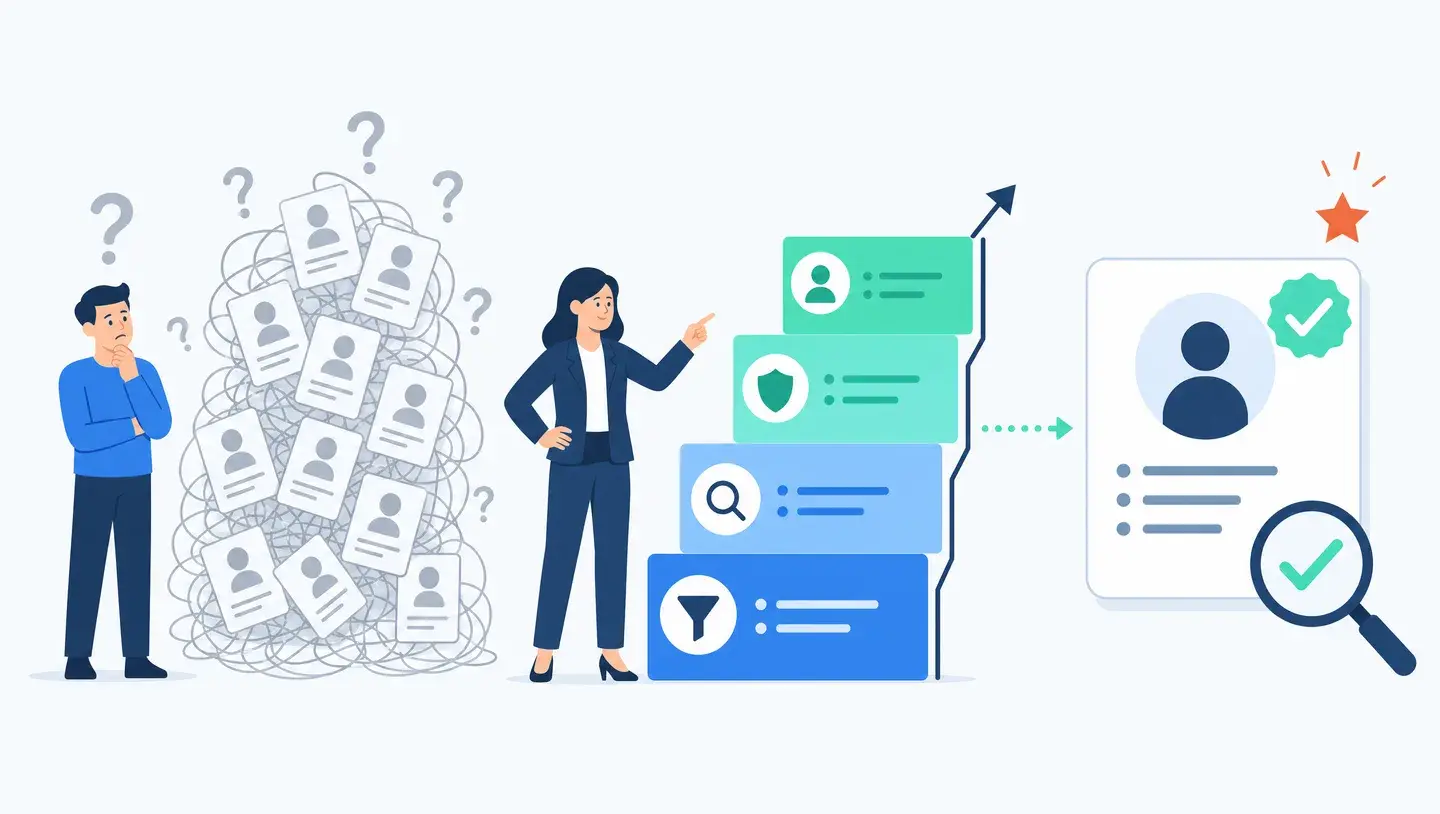
Why does searching for an AI consultancy in London return so many wrong answers?
Because "London" is a marketing field, not a delivery fact. A registered office in EC2 costs a few hundred pounds a year. It tells you where the company files its accounts. It does not tell you who writes the code, where they sit, or whether anyone on the team has shipped an AI system into a firm that answers to a regulator.
Three different businesses show up under the same search term. Product companies with a services arm, who will bill you for consulting while their roadmap points elsewhere. Generalist digital agencies who added an AI page in 2024. And a smaller group of implementation firms whose core work is putting models into production.
What does a London AI consultancy actually add to the price?
Mostly salary and property. London has the highest median full-time pay of any UK region, against a UK median of £767 a week in April 2025 (ONS), and senior AI engineers sit well above that median. Add central London office space and the cost base is real. Whether it buys you anything depends on how the work is done.
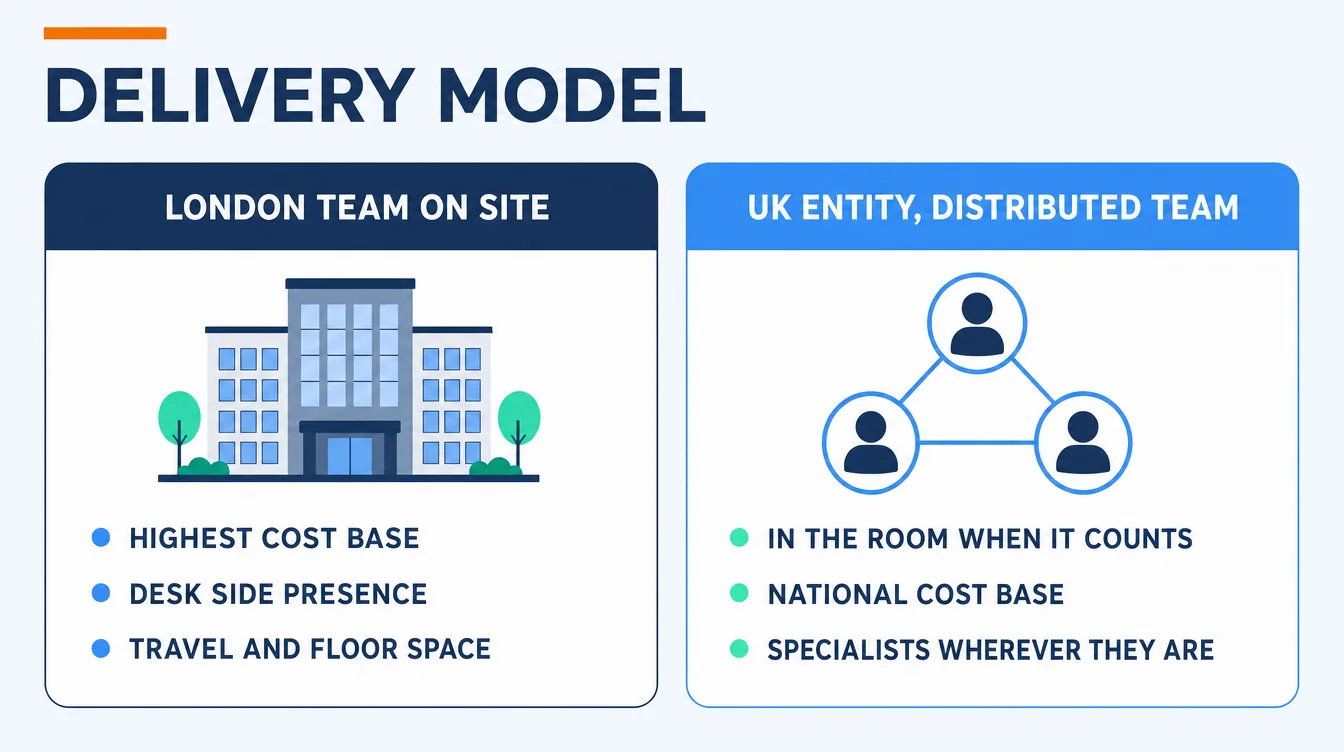
Here is the honest version of the three delivery models you will meet.
| Delivery model | Effect on price | Best for | Avoid if |
|---|---|---|---|
| London office, team on site with you | Highest. You pay London salaries plus travel and floor space | Change-heavy programmes, contested internal buy-in, workshops with people who will not join a call | Your own staff are hybrid, so the consultants sit in an empty room |
| UK-registered, distributed delivery, in the room when it counts | Middle. London accountability, national cost base | Most mid-market builds. Discovery and governance in person, engineering wherever the right people are | You genuinely need daily desk-side presence |
| Fully offshore, no UK entity | Lowest headline rate | Well-specified, low-sensitivity build work you can manage tightly | Personal or regulated data is involved. Check the transfer rules before you sign |
The middle row is where most good work happens now, and it is what we run. Our bands do not change by postcode: £10,000 to £20,000 for a discovery, £10,000 to £20,000 a month for an implementation retainer (our data, indicative, August 2026). If a quote jumps 30% because the meeting is in Mayfair, ask what changed in the scope.
Thinking about your own shortlist? A 30-minute discovery call gets you a straight read on whether your process is a good AI candidate, what it would take to prove it, and a realistic cost range before you commit to anything. You leave with a view you can take to your board, whether or not you work with us. Book a discovery call.
When does London actually matter, and when does it not?
Location matters when people have to be in a room and when someone has to be accountable under UK law. It matters much less for the engineering itself. Hybrid working settled that argument: 28% of working adults in Great Britain were hybrid workers in early 2025, and 45% of those earning £50,000 or more (ONS). The senior people you are buying are, statistically, the ones least likely to be at a desk five days a week.
| Situation | Does a London base matter? | What to ask instead |
|---|---|---|
| Discovery workshops with operations staff | Yes. Get them in a room for a day, it saves weeks | Who exactly attends, and are they the people who will build it? |
| Walking a regulator or auditor through a control | Yes, usually | Will the same named person present it, or a partner you meet once? |
| Day-to-day engineering and model work | No | Where does the code live, and who reviews it? |
| Handling personal or client data | Not the office. The entity and the access | Which legal entity processes it, and can anyone outside the UK see it? |
| Executive buy-in and change resistance | Yes | Who runs the sessions, and have they done it in our sector? |
The data point most buyers miss sits in that fourth row. Under UK GDPR, making personal information accessible to a separate organisation outside the UK counts as a restricted transfer, and the rules apply even to small, infrequent transfers (ICO, January 2026). A Shoreditch address proves nothing about that. A named contracting entity, a data flow map and an answer on remote access do.
How do you shortlist an AI consultancy in London?
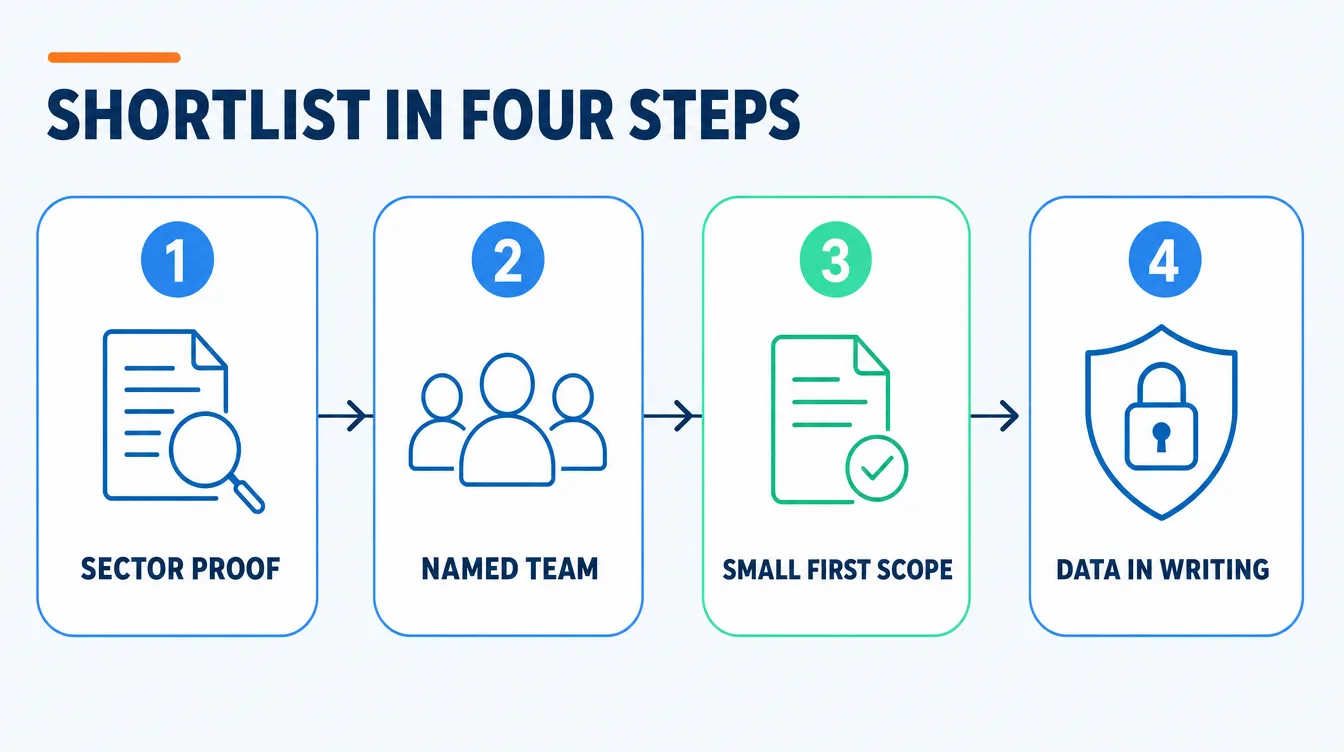
Six checks, in the order that saves the most time.
1. Sector proof, not logo walls. Ask for two examples in your regulatory environment, with the constraint they had to work around. Vague answers here predict vague delivery. Our fuller version of this checklist is in how to choose an AI consulting firm in the UK.
2. The named team. Get the actual names of the people who will do the work, their availability, and what else they are on. Pitch teams and delivery teams are often different people. This is the single most common gap between the sales meeting and month two.
3. A first piece of work you can cancel. A paid discovery or proof of concept with a fixed price, a written definition of success and a decision point at the end. We put ours at £10,000 to £20,000 and return the fee if the proof of concept fails its agreed test (our data, August 2026).
4. Data handling, in writing. Which entity contracts, which sub-processors are involved, where the model runs, whether prompts or outputs are retained, and who can access what from where. If they cannot produce a one-page answer, they have not done regulated work.
5. What happens after go-live. Who owns the repository, who holds the model keys, what the support arrangement costs, and how you take it in house if you want to. Ask this before you sign, because the answer changes the price.
6. An honest "no". A firm that tells you a process is a poor AI candidate, or points you to Microsoft Copilot because you are a Microsoft 365 shop, is worth more than one that says yes to everything. For a view of who is strong at what, see our survey of AI consulting companies in the UK.
What does this look like in a regulated London firm?
Financial services is the sharpest example, because the FCA holds a named individual accountable under the Senior Managers and Certification Regime. That changes what you are buying. You are not buying a model. You are buying a control that a person can defend.
Take a compliance file review. An advice firm has to check a sample of client files each month against suitability rules, and a reviewer works through them by hand. In our anonymised financial-advice compliance file review work we scoped exactly this: the model drafts the review and flags the gaps, a qualified reviewer signs every file, and every decision keeps an audit trail. That engagement is a scoped proposal rather than a live production system, and we say so, because the honest framing is part of the point. The pattern matters more than the badge: the human stays accountable, the machine removes the reading time.
The same shape applies in legal work under the SRA, and in health settings under CQC oversight and the DCB0129 and DCB0160 clinical safety standards. Name your regulator early and ask the supplier to explain, in their own words, what it changes about the design. The ones who have done it will answer in about a minute.
What are the red flags?
A day rate quoted before anyone has seen your process. Case studies with no numbers in them. A refusal to name the delivery team. "Proprietary model" claims with no explanation of what sits underneath. Pricing that moves sharply between the first call and the proposal without a scope change to explain it. And any supplier who will not put a stop point in the first engagement.
Frequently asked questions
Is a London AI consultancy more expensive than one elsewhere in the UK?
Often, yes, because London carries the highest median pay of any UK region (ONS, October 2025) and central office costs on top. The gap narrows when the firm is London-registered but delivers with a distributed team. Compare scope and named people, not headline day rates.
Do I need my AI consultancy to be based in London?
Only for the parts that need a room: discovery workshops, governance meetings, and sessions where you need people to turn up in person. Engineering does not need a postcode. What you do need is a UK contracting entity and a clear answer on who can access your data from where.
How much does an AI project cost in London in 2026?
Our indicative bands are £10,000 to £20,000 for a discovery and £10,000 to £20,000 a month for an implementation retainer (our data, August 2026). Fixed-scope proofs of concept sit at the lower end. Anything quoted without a discovery is a guess dressed as a price.
How long does a first AI project take?
We work to production in 90 days at a fixed price, with the fee returned if the proof of concept fails its agreed test. Discovery typically runs two to four weeks before that clock starts. Timelines stretch when data access or sign-off sits with someone who has not been in the room.
What should I ask about data protection?
Which legal entity contracts with you, which sub-processors are involved, where the model runs, whether inputs and outputs are retained, and whether anyone outside the UK can access the data. That last one matters because remote access from outside the UK is treated as a restricted transfer under UK GDPR (ICO).
Are we the right fit for a Microsoft-heavy business?
Sometimes not, and we will say so. If your teams live in Microsoft 365 and the use case is drafting and summarising inside Office, Copilot is usually the cheaper answer. We are Anthropic-native, and where Claude is the better fit we can show you why with your own process.
SoftBlues is a London-based AI consultancy and a registered member of the Anthropic Partner Network, with registered partnerships across Google Cloud and Microsoft. We run six of our own departments on Claude, so most of what we recommend we have already broken and fixed on ourselves first. We put systems into production in 90 days at a fixed price and return the fee if the proof of concept fails. The process side of that work sits under business automation.
If you are drawing up a shortlist and want a straight read on whether your process is worth automating, book a discovery call. Thirty minutes, no deck.
See it in production
Systems we have built and run for clients, with the numbers that came out of them.
Related Articles
Claude Enterprise vs Team vs Pro: Which Plan Does Your Business Need?

Gemini for Business vs Claude Enterprise: Which Fits Your Company in 2026?