Best AI Consulting Companies in the UK (2026): Who's Good at What
Named UK AI consulting firms compared for 2026: what each is best at, where each is wrong, and what the Accenture-Faculty deal changed. No paid placements.
By Ivan Pylypchuk, CEO of SoftBlues. Has led Claude and automation projects for finance, legal and healthcare teams across the UK and Ireland. Last updated: 29 July 2026.
The UK AI consulting market consolidated hard this year. Accenture completed its acquisition of Faculty on 16 March 2026, taking more than 400 AI specialists and Faculty's co-founder Marc Warner, who became Accenture's chief technology officer (Accenture, Mar 2026). BJSS, another name that appears on almost every "best AI consultancy" list, now belongs to CGI. If you are working from a shortlist written eighteen months ago, two of your independent specialists are no longer independent.
SoftBlues is an AI consultancy at softblues.io, a registered Anthropic Partner Network member and a Google Cloud Partner, working with regulated mid-market companies across the UK and Ireland. We are on this list. We have put ourselves in the same table as everyone else and given you the criteria to judge us with.
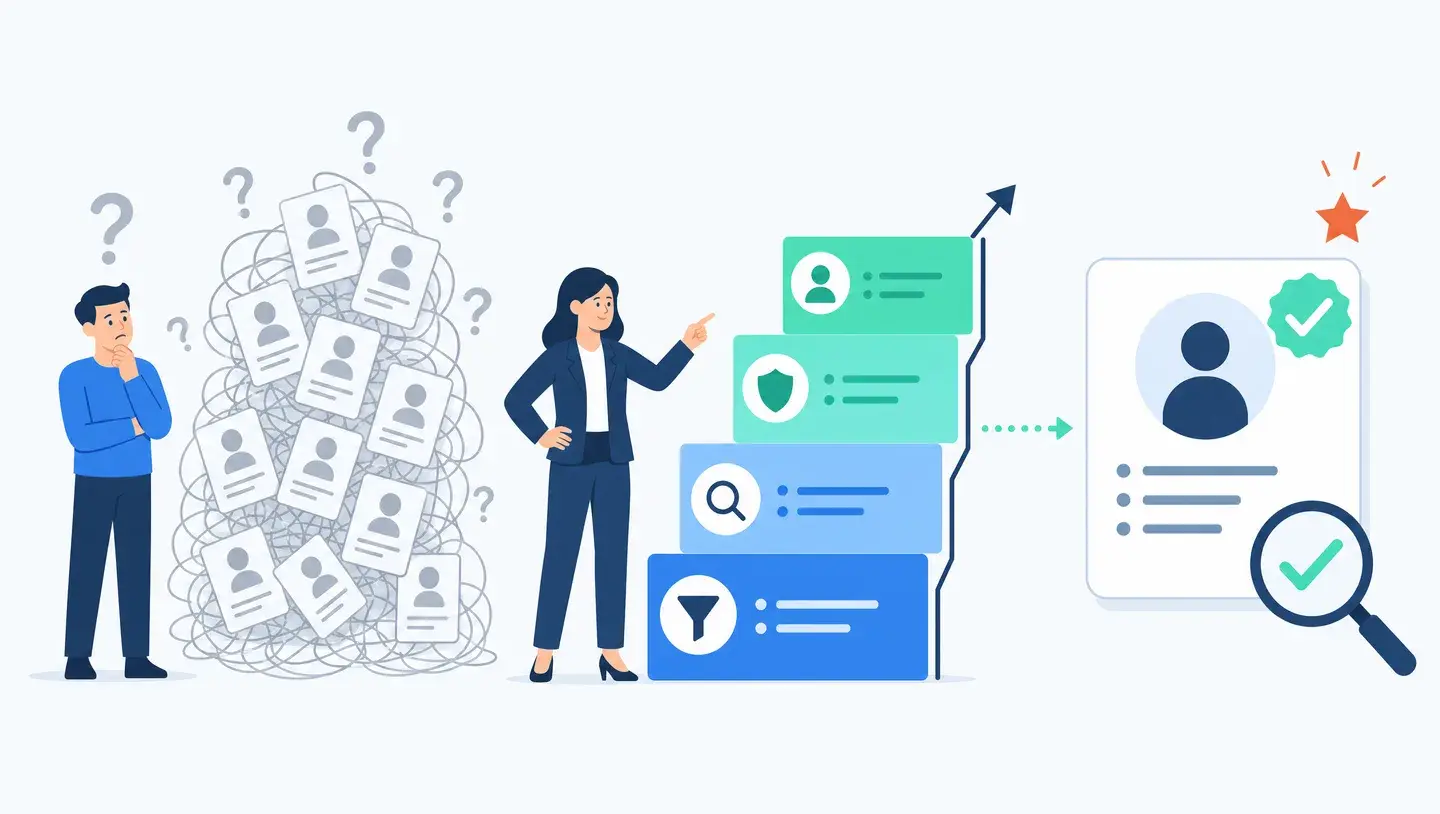
The best AI consulting company in the UK depends entirely on what you are buying. A global consultancy running a multi-country transformation programme and a fifteen-person specialist putting one model into production are both legitimate answers to "who is best", and they are answers to different questions. This guide names real firms, says what each is genuinely good at, says where each is the wrong choice, and gives you a way to build a shortlist in an afternoon.
Key facts
How we chose, and how you should
We are not going to tell you there is a single best firm, because there is not one. Instead, each entry below answers four questions: what the firm is genuinely strong at, roughly what scale of engagement it is built for, where it is the wrong choice, and what you should ask it.
Three things we deliberately did not do. We did not rank by revenue, because size tells you nothing about whether your project will ship. We did not include pricing for individual firms, because almost none publish it and inventing numbers would be worse than useless. And we did not put ourselves at the top.
The AI consulting companies, compared
| Company | Type | Best for | Base / coverage | Where it is the wrong choice |
|---|---|---|---|---|
| Accenture (incl. Faculty) | Global consultancy | Multi-country transformation, board-level change programmes, deep data science since the Faculty acquisition | Global, large UK presence | One focused system shipped quickly on a mid-market budget |
| McKinsey QuantumBlack | Strategy firm AI arm | Heavyweight data science and custom models tied to strategy work | Global, London | You already know what to build and need it built |
| IBM Consulting | Global integrator | Systems integration at scale, complex legacy estates | Global | Speed, or a small first project |
| Capgemini | Global consultancy | Multi-industry delivery, supply chain, manufacturing, financial services | Global, UK-wide | Anything requiring a small senior team |
| Cognizant | Global integrator | Process automation in financial services and insurance | Global, London | Frontier model work rather than process automation |
| Deloitte, PwC, KPMG, EY | Big four | AI governance, risk, audit-adjacent assurance and regulatory readiness | Global, UK-wide | Hands-on engineering |
| Kainos | UK digital services | Public sector and healthcare AI. Fifth-largest AI supplier to UK government since 2018, over £61m in data and AI contracts, 250+ AI professionals | Belfast, UK-wide | Purely commercial mid-market work with no public-sector angle |
| BJSS (now CGI) | UK consultancy | Technical delivery and engineering depth in retail and finance | UK-wide | If independence from a global parent matters to you |
| Deeper Insights | UK AI specialist | NLP, machine learning engineering, computer vision, agents and RAG. PhD-level data science team | UK | Large-scale change management |
| Aiimi | UK data and AI specialist | Data insights and AI at scale in the enterprise | UK | Small first projects |
| Slalom | Modern consultancy | Strategy-led AI with heavy change management and human-centred design | 45+ markets including UK | Deep bespoke model research |
| Pulsion | UK consultancy | AI strategy through to implementation for organisations starting from readiness | UK | Frontier research |
| Ode (Anthropic, Blackstone) | Model-vendor JV | Mid-market Claude adoption, backed by Anthropic itself | US-led, ~100 engineers | You want a partner independent of any one model vendor |
| SoftBlues | Specialist implementation partner | One Claude or automation system into production in a regulated UK or Ireland mid-market firm, fixed price, 90 days | London, UK and Ireland | 200-person global rollouts, or pure staff supply |
What the 2026 consolidation means for you as a buyer
This is the part the older lists miss, and it changes how you should read every other list you find.
Faculty was, for a decade, the answer when a UK buyer wanted serious applied AI without hiring a global consultancy. It built the NHS early warning system that forecast hospital demand during the pandemic and worked extensively with UK government. As of 16 March 2026 it is part of Accenture. The people are still excellent. The commercial reality around them is not the same one, and neither is the minimum engagement size.
The same pattern applies to BJSS inside CGI.
Two practical consequences. First, check who actually owns a firm before you shortlist it, because half the directory listings have not been updated. Second, if independence mattered to you, the pool is smaller than it looks, and the remaining independents are mostly smaller than the firms that were bought.
There is a counterweight. Anthropic's partner network is open and tiered rather than invitation-only, which has let genuinely small firms qualify on delivery evidence instead of on size. We wrote up how that ladder works in Claude implementation partners in the UK.
Which AI consultancies work in London?
Almost all of them. London is where the UK AI consulting market physically sits: Accenture, McKinsey QuantumBlack, IBM Consulting, Capgemini, Cognizant, the big four and Slalom all run London practices, and most of the specialists either sit in London or serve it as their primary market.
Which means "AI consultancies in London" is not a useful filter on its own. Every firm in the table above can get to your office. The questions that actually narrow a London shortlist are whether the people who sell to you are the people who build, whether they have delivered in your regulatory environment, and whether the engagement size matches your budget.
If you are outside London, ask specifically where the delivery team sits rather than where the office is. A London address frequently means a London sales team and a delivery team somewhere else entirely, which is fine if you know about it and irritating if you find out in week three.
How is generative AI consulting different from ordinary AI consulting?
The model is no longer the hard part. Anyone can call Claude or GPT from an API in a morning. The difficulty sits around the model: getting your own documents into it safely, and then proving the output is right often enough that somebody will sign their name to it.
That shift matters when you choose a supplier. A classical AI consultancy sells data science: feature engineering, model training, accuracy metrics on a test set. A generative AI consultancy sells system design around a model somebody else trained. The skills overlap less than the job titles suggest.
Four capabilities separate a real generative AI practice from a firm that has renamed its data science page. Retrieval that respects permissions, so your contracts and policies reach the model without a junior seeing the board pack. A graded evaluation set built from your own cases before anyone builds a demo, because "it worked when we tried it" is not evidence when the output is probabilistic. Human sign-off designed in during week one, since deciding which outputs go straight through carries regulatory weight. And a maintenance model with a price on it, because models get deprecated and prompts drift.
Ask about all four in the first call. A firm that has shipped generative AI in production will have opinions on each. A firm that has not will talk about the model instead.
AI advisory firms versus AI implementation partners
These get used interchangeably and they are different purchases.
An advisory firm produces a decision. Strategy, readiness assessment, use-case prioritisation, operating model, business case. You end with a document and a direction. The big four and the strategy firms are strongest here, and it is genuinely valuable when the organisation does not yet know what it should build.
An implementation partner produces a working system. Integration, evaluation, guardrails, training, handover. You end with something in production that people use.
Buying the first when you needed the second is the single most common expensive mistake we see. A company spends six figures on a roadmap, the roadmap is correct, and eighteen months later nothing is live because nobody was accountable for shipping. If you already know roughly what you want to automate, skip the strategy engagement and buy delivery.
We set the two side by side in AI consultant, consultancy or in-house hire.
AI consulting for SMEs and mid-market companies
If you have fewer than about 500 staff, most of the firms in the table above are not built for you, and their minimum engagement will tell you so before their sales team does. Minimum project fees from £100,000 are common at the top of the market.
What works at mid-market scale:
This is the segment we built SoftBlues around, and it is also the segment Ode was launched to serve, so expect more competition here over the next year rather than less. For a sense of what one process at this scale looks like when it is finished, see our compliance file review automation work in financial advice.
How to turn this into a shortlist
Four steps, an afternoon's work.
Then ask all of them the same five questions, ours included: what exactly will be in production and by when, what is the fixed price, who is personally accountable, what happens if it fails, and what does it cost to run afterwards. The full version is in how to choose an AI consulting firm in the UK.
Working in Ireland rather than the UK? The market is different enough to be worth its own list: AI consulting and development companies in Ireland.
Red flags in a generative AI pitch
A demo on their data, never yours. A polished demo on public documents proves the model works. It proves nothing about your files, your permissions or your edge cases.
Accuracy quoted as a single percentage with no test set behind it. Ask what the denominator is. Without a graded set of real cases, the number is decoration.
"We are model agnostic" used instead of a recommendation. Working with several models is fine. Refusing to say which one fits your problem, and why, usually means nobody has thought about it.
Three questions worth asking on the first call
Alongside the five above, these three sort the firms that have shipped from the firms that have pitched.
"Who will actually write the code?" A good answer names people and their availability. A weak one describes a team structure.
"Where does my data sit while the model is processing it?" A good answer names the region, the tenant and the data processing agreement without going away to check.
"If we are not a fit, who should we talk to?" A good answer names a competitor. It is the most reliable honesty test there is.
The longer version of this list, with what a good answer sounds like in each case, is in generative AI consulting: 10 questions to ask before you sign.
Frequently asked questions
Who are the best AI consulting companies in the UK?
There is no single answer, because the firms are built for different jobs. For multi-country transformation, Accenture and the global consultancies. For heavyweight data science, McKinsey QuantumBlack and Accenture's Faculty team. For public sector and healthcare, Kainos. For specialist AI engineering, Deeper Insights and Aiimi. For one system into production in a regulated mid-market firm, a specialist implementation partner such as SoftBlues. Match the firm to the job rather than to a ranking.
Did Accenture buy Faculty?
Yes. Accenture completed the acquisition on 16 March 2026, reportedly valuing Faculty at over $1 billion. More than 400 AI professionals joined Accenture and Faculty co-founder Marc Warner became Accenture's chief technology officer. Faculty is no longer an independent UK AI consultancy, which matters if independence was your reason for shortlisting it.
How much does AI consulting cost in the UK?
Day rates run roughly £500 to £2,000 for independents, £900 to £1,600 for mid-tier firms, and £2,000 to £5,000 for the large management consultancies, which typically also carry minimum project fees from £100,000. A scoped proof of concept at SoftBlues sits at about £20,000. We break the arithmetic down in AI consulting costs in the UK.
Are the big consultancies better than specialists for AI?
They are better at different things. Global consultancies are better at multi-country programmes, procurement comfort, board-level change management and problems that span many departments. Specialists are better at getting one system live quickly, at a price a mid-market company can approve, with the people who sold it doing the work. Neither is better in general.
Why is SoftBlues on its own list?
Because leaving ourselves off would be dishonest and putting ourselves first would be worse. We are a specialist implementation partner, we are in the table with the same columns as everyone else, including where we are the wrong choice, and the ordering is by category rather than preference. Judge us with the same five questions we suggest you ask everyone.
How do I verify a firm's AI credentials?
Ask for three things: how many of its people hold a current certification with the model vendor you are buying, how many customers it has taken live in the last twelve months, and how many of those will take a reference call. Anthropic publishes tier requirements and verifies them quarterly, so for Claude work you can check a firm's claim against a public standard rather than taking its word.
Which type of firm suits a regulated company?
Whichever one can show you a live deployment in your regulatory environment with the human sign-off design intact. Regulation is less about the size of the firm than about whether it has built approval steps, audit logging and human review into a working system before. Ask to see how a consequential decision gets approved in something they already run.
Should I hire in-house instead?
If AI is core to your product and you have steady ongoing work, yes, eventually. If you need one system live this quarter and you cannot yet recruit, manage and retain AI engineers, a partner is faster and cheaper. Most mid-market companies do both in sequence: bring in a partner for the first system, hire once there is enough work to keep a team busy.
What is generative AI consulting?
Generative AI consulting is professional services built around foundation models such as Claude and GPT rather than around models trained from scratch. The work is retrieval design, evaluation, guardrails, integration, human-in-the-loop workflow design and maintenance. Advisory firms stop at a decision, and implementation partners deliver a system in production.
How long before a generative AI project is live?
For one well-chosen workflow, 90 days is a realistic target and is what we contract to. Anything promising two weeks is describing a prototype. Anything quoting a year has probably scoped a programme rather than a system.
Sources
Company size is not a proxy for whether your project ships. Delivery evidence is. Ask every firm on your shortlist, including us, for a live system of the same shape and a client who will take the call.
SoftBlues is a registered Anthropic Partner Network member and a Google Cloud Partner. We put one system into production in 90 days at a fixed price, with a money-back guarantee if it fails, and the people who scope it are the people who build it. If you want a straight answer on whether we are the right fit, and we will tell you when we are not, book a discovery call.
See it in production
Systems we have built and run for clients, with the numbers that came out of them.
Related Articles
Claude Enterprise vs Team vs Pro: Which Plan Does Your Business Need?
Gemini for Business vs Claude Enterprise: Which Fits Your Company in 2026?