AI Consulting Services UK: The Full Menu and What Each Costs
UK AI consulting comes down to seven things you can actually buy. Discovery £10,000 to £20,000, a two-month proof of concept £20,000, implementation £10,000 to £20,000 a month. Plus the three lines that are usually padding.
By Ivan Pylypchuk, CEO of SoftBlues. Has led Claude and Gemini implementations for finance, legal and healthcare teams across the UK and Ireland.
AI consulting services in the UK come down to seven things you can actually buy: discovery, technical audit, proof of concept, implementation, training, support and embedded engineers. Expect £10,000 to £20,000 for discovery, around £20,000 for a two-month proof of concept, and £10,000 to £20,000 a month to build. Most other line items on a proposal are one of those seven renamed.
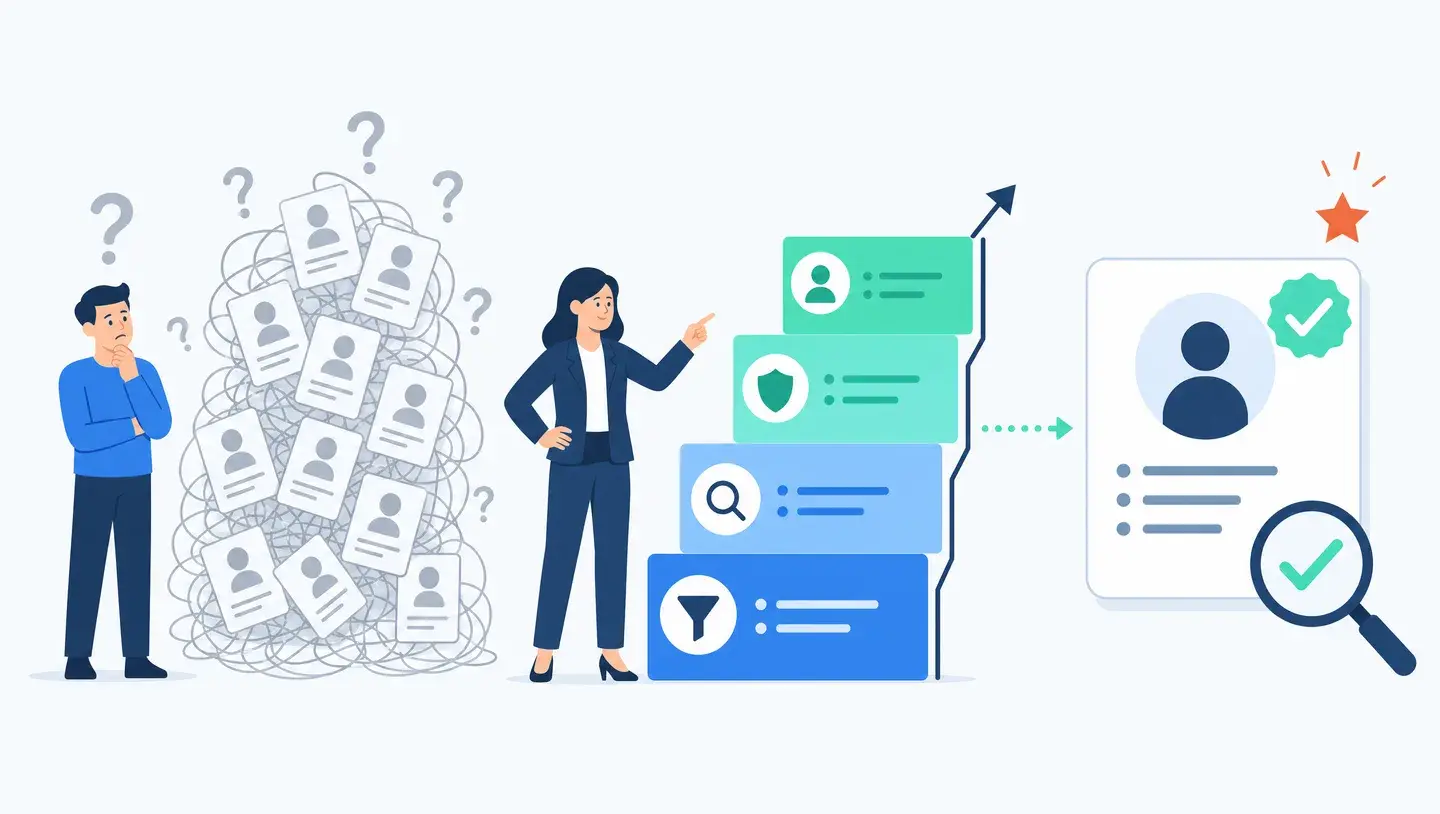
The share of UK businesses with ten or more employees using at least one AI technology has risen from around 12% in late 2023 to around 35% in June 2026. Over the same period the average number of AI technologies per business moved only from about 1.4 to 1.6, and just 10% of AI-adopting businesses say they use AI extensively (ONS, July 2026). Adoption tripled. Depth barely moved. At SoftBlues, an AI consulting firm working with regulated mid-market companies across the UK and Ireland, we think a good part of that gap is a buying problem. The menu is written so you cannot tell which line item produces a working system and which produces a document.
So here is the menu, with the price against each line.
Key facts
Who this is for, and who it isn't
This is for you if you run a 50 to 500-person UK or Irish firm and you are holding two or three AI proposals, trying to work out why one is £18,000 and another is £180,000 for what reads like the same thing. It is most useful to the CEO, COO or finance director signing the invoice rather than the person writing the spec.
Skip it if you want a weekend prototype. Skip it too if you have already put three AI systems into production and know exactly which service lines you need.
What counts as an AI consulting service, and what does each one cost?
Every proposal you receive is some combination of the seven rows below. The names change between providers. The work does not.
| Service line | Typical duration | What you should hold at the end | Indicative UK price |
|---|---|---|---|
| Discovery / strategy assessment | 2 to 3 weeks | Ranked use-case list, a data-readiness verdict per candidate, a fixed-price plan with a payback line for the first build | £10,000 to £20,000 fixed (our data) |
| Technical or code audit | 1 to 4 weeks | Architecture verdict, risk register, security findings, a costed remediation plan | £4,150 to £8,300 for 10 to 20 senior days (our data, at £415 a day) |
| Proof of concept | 2 months | One use case working on your real data, technical documentation, a build-or-stop recommendation | £20,000 fixed (our data) |
| Implementation / build | 3 to 12 months | A system in production, integrated with your stack, tested, with a named owner | £10,000 to £20,000 a month (our data) |
| Training / enablement | 2 to 5 days | A team that can run the system without us, plus written internal guidance | £1,260 to £1,660 for a two-day programme including preparation (our data, calculated from day rates) |
| Support / managed service | Ongoing | Monitoring, fixes, model and prompt updates, a response time you can hold someone to | From £830 a month for two senior days (our data, calculated) |
| Embedded engineers | 6 to 12 months and beyond | Named people in your team, your management, our employment admin | £200 to £410 a day per role (our data) |
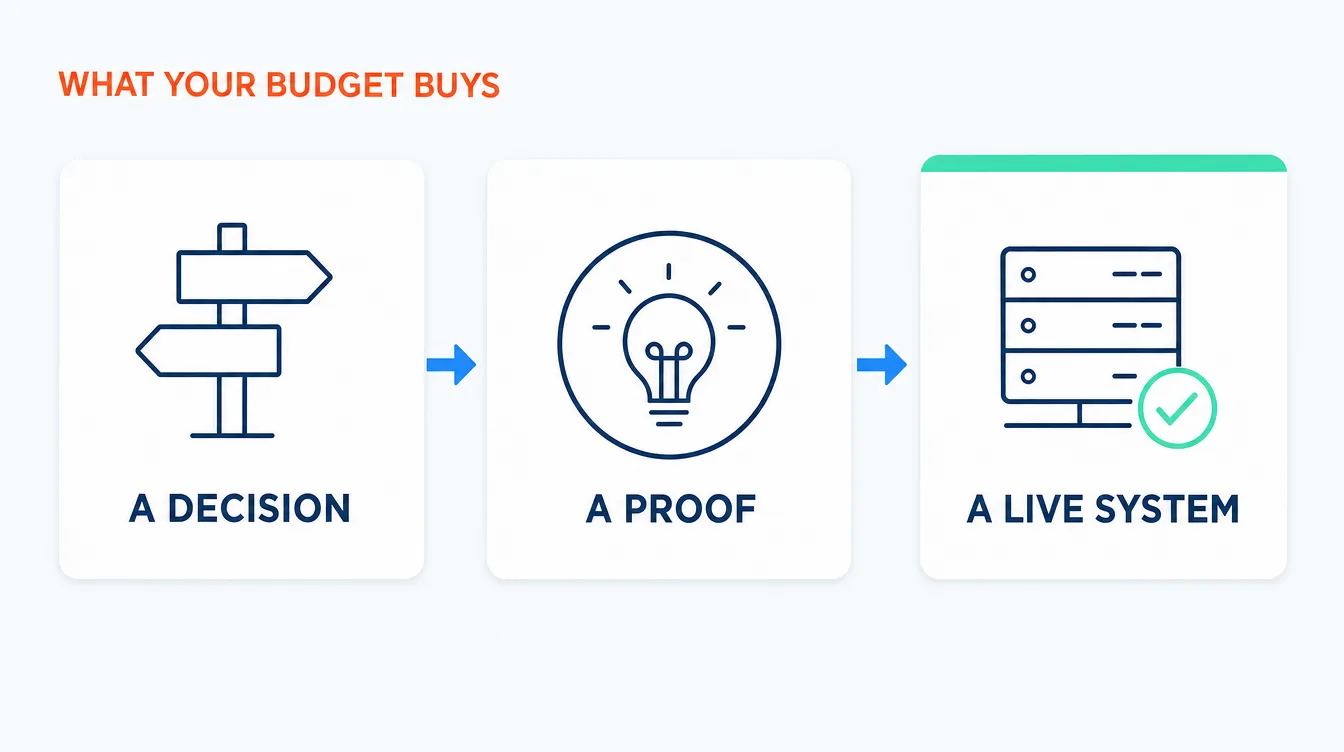
Two things are worth noticing. Only two of those rows produce a running system: implementation, and partly the proof of concept. The rest buy you a decision, a skill, or a safety net. That is fine as long as you know which one you are paying for.
The market range around these numbers is also very wide. Independent consultants bill £500 to £2,000 a day, boutiques £1,200 to £2,500, and large management firms £2,000 to £5,000 with minimum projects from £100,000 (market ranges, 2026, Helium42). Our own project day rates sit at £275 to £415 by role, about half the UK mid-market equivalent, because delivery runs through our engineering team rather than a London consulting bench (our rate card, June 2026). The day-rate mechanics are broken down further in our UK cost guide.
Which of these do you actually need first?
Most mid-market firms need three of the seven, in this order: discovery, then a proof of concept, then implementation. Training and support attach to the third. An audit is only worth buying if something already exists, and embedded engineers only make sense once you have a live system and a team to run it.
The common mistake is buying implementation first, because it is the row that sounds like progress. Skipping discovery is how a build ends up starting on the use case with the worst data. The second mistake is buying discovery twice, once as "AI readiness" and again as "strategy". That is the same fortnight of work invoiced two ways. If you want to know what a strategy engagement should actually hand over, we set out the artefacts in what AI strategy consulting should get you.
With no AI in production yet, the honest shape is roughly £30,000 to £40,000 and three months to learn whether the thing is worth building: discovery, a proof of concept on real data, then a decision. Set against a £323,000 twelve-month build, that is the cheapest place in the whole process to say no.
Not sure which lines you need? A 30-minute discovery call is usually enough to sort it. You leave with a view on which of your processes is the strongest first candidate, whether your data is ready for it, and a rough band for what the first useful thing would cost.
Which services are usually padding?
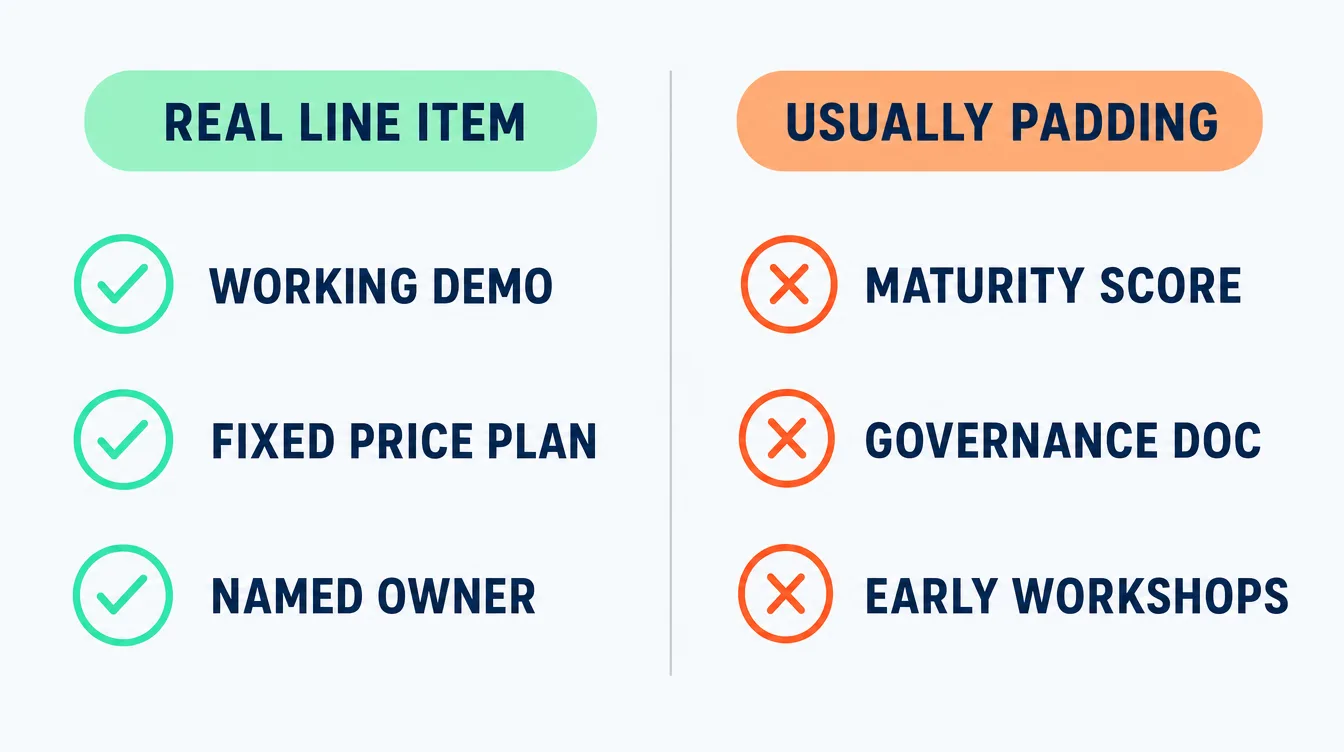
Three line items turn up often, cost real money, and rarely change what happens next.
A separate AI readiness assessment. This is discovery under another name. When a provider quotes readiness and strategy as two engagements, ask which deliverable appears in one and not the other. Usually the answer is a maturity score, and a maturity score has never made a project work.
A standalone AI governance framework. For a UK mid-market firm, most of what you need already exists and costs nothing. The ICO's guidance on AI and data protection covers the data side and your sector regulator covers the rest. Mapping your use case onto that guidance belongs inside discovery. Selling the map as its own workstream is padding.
A change-management workstream before anything is live. Adoption work matters, but it belongs after the system exists and people can see it. Bought upfront it becomes a series of workshops about a tool nobody has touched.
There is a fourth, softer one. Some providers add margin on model or platform licences. Ask whether you are being resold licences and at what markup, then price them up directly and compare.
How long does each service take, end to end?
Duration is where proposals quietly part company with reality. These are the shapes we see on our own UK and Irish engagements.
| Phase | Elapsed time | Who is involved from your side | What "done" looks like |
|---|---|---|---|
| Discovery | Weeks 1 to 3 | Three to six people for two hours each, plus data access | A signed-off plan and a price for the first build |
| Proof of concept | Weeks 4 to 11 | One process owner, a few hours a week | The use case working on your real data, or a documented reason to stop |
| Implementation | Months 3 to 9 | A process owner and someone from IT | Live, integrated, monitored, with a rollback path |
| Training | 2 to 5 days, at go-live | The team who will use it | People using it unaided a week later |
| Support | From go-live | Whoever owns the process | An agreed response time and a change log |
The number to hold a provider to is not the total. It is the date of the first working demo on your own data. If that date is more than eight weeks out, the plan carries too much upfront analysis. We build to production in 90 days on a fixed price, and the demo lands well before that. Live, not in a slide deck.
You can see what that looks like when we do it to ourselves. Six of our own departments run on Claude, and we wrote up the architecture, the failures and the cost in our Claude operating system case study.
What changes in a regulated sector?
The menu stays the same. Two rows get longer and one stops being optional.
In UK financial services, the FCA's Senior Managers and Certification Regime means a named individual owns the outcome of an automated decision, so discovery has to establish who that person is before implementation starts. In legal, the SRA expects supervision of work product, which in practice means a human-review step designed into the workflow rather than bolted on afterwards. In healthcare in England, the CQC applies alongside the clinical-safety standards DCB0129 and DCB0160, and if the software might be classed as a medical device the MHRA comes into scope. Across all of them, UK GDPR and the ICO govern what data can reach a model at all.
In practical terms this adds one to two weeks to discovery and a review gate to implementation. It also moves the audit row from optional to worth buying. A worked example from our own engagements: a monthly compliance file review in financial advice, where the useful shape was a system that reads the file, flags gaps against a checklist and hands the reviewer a ranked queue, with the adviser still signing. We published the anonymised compliance file review approach. It is at proposal stage rather than live, so read it as a shape rather than a result.
None of this is legal advice. It is the list to put in front of your compliance team before you sign.
What are the red flags in a service menu?
Questions to ask on the call, and what a good answer sounds like
1. Which of the seven service lines am I buying, and which am I not? A good answer names them plainly and says what is deliberately out of scope. A weak answer restates the proposal.
2. What will I have in my hands at the end of week two? Good: a named artefact and a date. Bad: "we will be in the discovery phase".
3. Which of my processes would you refuse to automate, and why? Anyone who has delivered a few of these has a list ready. No list means no delivery history.
4. Is my data ready, and how will you tell me if it is not? You want a data-readiness verdict per use case, in writing, with the option to stop.
5. Who owns the outcome when the model gets it wrong? In a regulated firm that answer has a person's name in it.
6. What does this cost to run for a year after go-live? Licences, hosting, support days, and a sensitivity on model prices. A provider who has not modelled year two has not run one.
7. What happens if the proof of concept fails? We refund it. Ask what their version of that sentence is.
Frequently asked questions
What are AI consulting services in the UK?
They are seven distinct purchasable lines: discovery, technical audit, proof of concept, implementation, training, support and embedded engineers. Any proposal is a bundle of these, priced from around £10,000 for a discovery to several hundred thousand for a twelve-month build.
How much do AI consulting services cost in the UK in 2026?
Discovery is £10,000 to £20,000, a two-month proof of concept around £20,000, and implementation £10,000 to £20,000 a month at SoftBlues rates as of June 2026. Market day rates run from £500 to £5,000 depending on the type of provider. The mechanics are in our UK cost breakdown.
What is the difference between AI advisory services and AI implementation?
Advisory produces decisions and documents. Implementation produces a running system. The tell is whether the final deliverable can be switched on. If you only want the decision, buy discovery and stop there on purpose rather than by accident.
Do I need discovery if I already know what I want to build?
Usually yes, but a short one. Discovery is mostly a data-readiness check, and knowing your desired outcome tells you nothing about whether the data supports it. A one-week version is reasonable when the use case is genuinely settled.
Which AI consulting services can I skip?
A separate readiness assessment, a standalone governance framework, and change management bought before go-live. Each one is either duplicated elsewhere in the menu or premature.
Should we buy AI consulting or hire in-house?
Buy for the first system, hire for the tenth. A senior AI engineer in the UK costs £600 to £1,200 a day at market low-to-high rates before you count recruitment time, and one person cannot cover strategy, build and support at once. We compared the options in consultant, consultancy or in-house.
What should a monthly support retainer include?
Named days, a response time, monitoring, model and prompt updates, and a change log you can read. If the retainer is a number with no day count behind it, ask for the day count.
SoftBlues is a registered Anthropic Partner Network member and a registered Google Cloud partner, working with regulated mid-market firms across the UK and Ireland. We build the systems ourselves rather than subcontracting delivery, we quote a fixed price, and we refund the proof of concept if it fails to deliver the agreed result. If you want a specific back-office process automated rather than a full programme, start with business process automation.
If you are holding two proposals and cannot tell which one buys a working system, bring both. Book a discovery call.
See it in production
Systems we have built and run for clients, with the numbers that came out of them.
Related Articles
Claude Enterprise vs Team vs Pro: Which Plan Does Your Business Need?
Gemini for Business vs Claude Enterprise: Which Fits Your Company in 2026?